Empowering Future Citizens
The PILAP Rights Curriculum
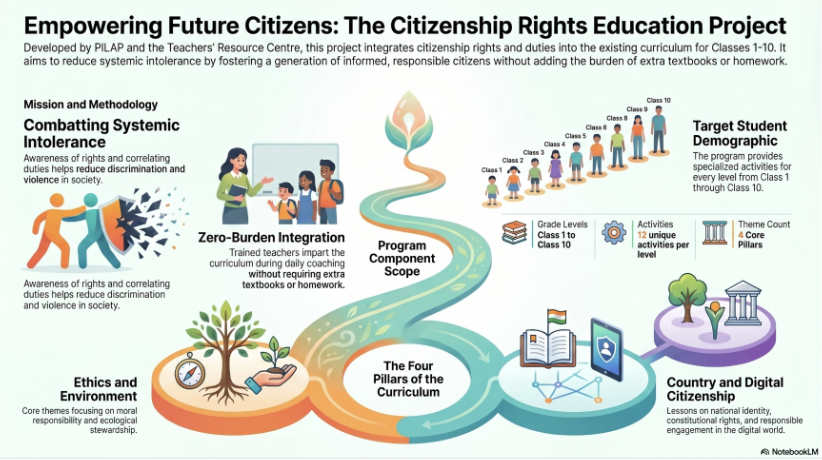
The Citizenship Rights Education project is a collaborative initiative designed to address the widespread lack of legal and civic awareness in Pakistan.
By integrating lessons on constitutional rights and responsibilities into existing school routines, the program seeks to foster a more tolerant and inclusive society.
The curriculum is structured around four primary pillars: ethics, environmental stewardship, national identity, and digital citizenship.
Teachers receive specialized training to deliver these lessons through interactive activities for students in grades one through ten, ensuring no additional academic strain.
Ultimately, the project aims to transform the youth into responsible citizens who respect the dignity of others while understanding their own fundamental protections.
Through this educational reform, the organizers hope to reduce systemic discrimination and build a more equitable future for the nation.
Classroom Activities for Grades 1-3
Citizenship Education
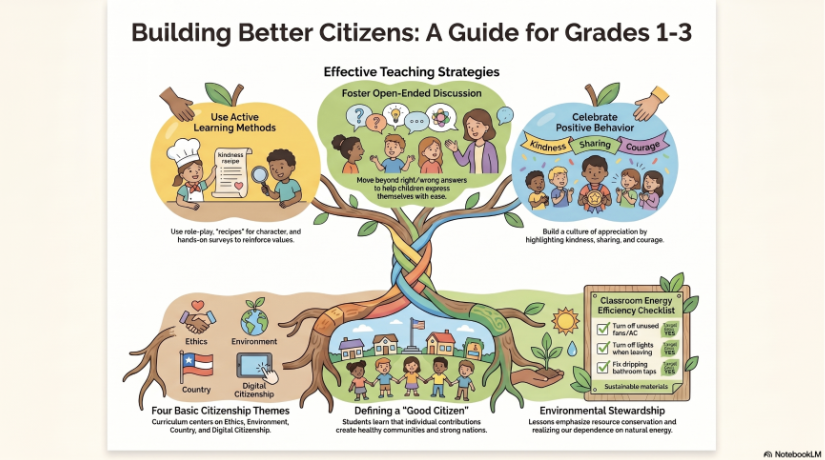
The manual outlines a citizenship education initiative created by the Teachers’ Resource Centre in Pakistan to foster social responsibility in young students.
Designed for grades one through three, the manual provides instructors with structured lesson plans focused on ethics, environment, country, and digital citizenship.
Specific classroom activities use storytelling and interactive exercises to teach children about personal safety with strangers, the essential traits of a good citizen, and the importance of energy conservation.
By integrating these themes into the primary curriculum, the project aims to build a foundation for moral character and community engagement.
Each module includes clear objectives and learning outcomes to help teachers effectively measure student progress in these vital social areas.
Classroom Activities for Grades 4 - 6
Citizenship Education
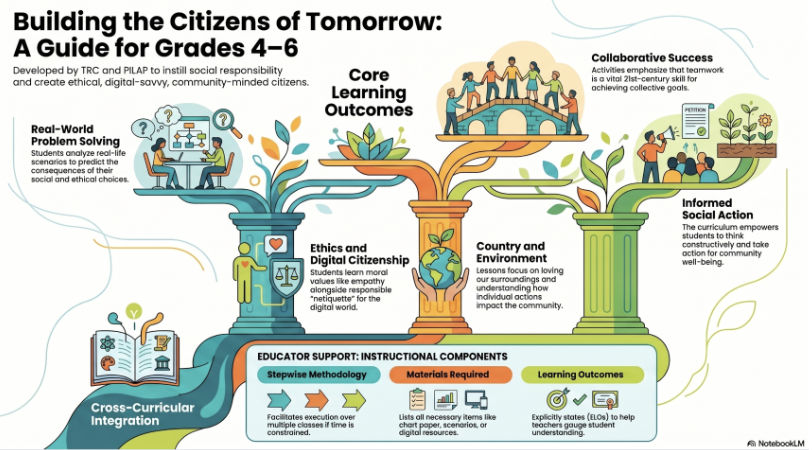
This educational guide provides classroom activities designed to foster social responsibility and civic values in students from grades four through six.
Created by the Teachers’ Resource Centre in Pakistan, the material focuses on four essential pillars: ethics, the environment, country, and digital citizenship.
Each section offers practical lesson plans, such as role-playing moral dilemmas for younger students and analyzing online etiquette for older children.
By integrating these themes into the curriculum, the program aims to help youth transition from being good human beings to becoming engaged, responsible citizens.
The resource further supports educators with clear methodologies and objective-based learning outcomes to ensure students understand their role within a community.
Classroom Activities for Grades 7-10
Citizenship Education
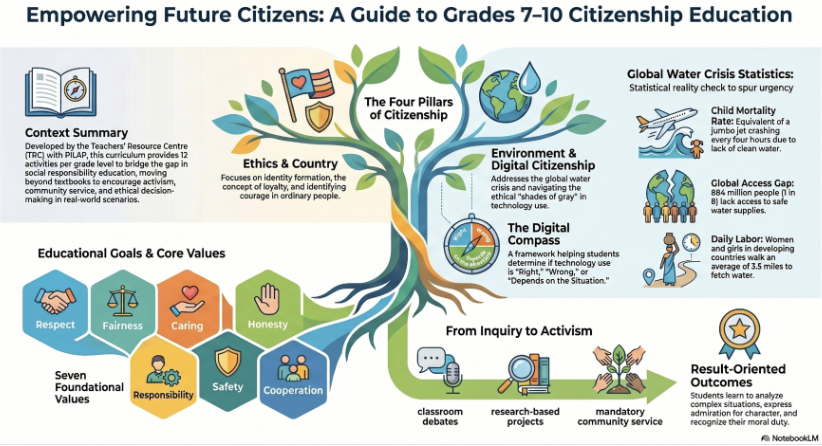
The provided document introduces a citizenship education initiative developed by the Teachers’ Resource Centre and PILAP to foster social responsibility in students from grades 7 to 10.
This comprehensive manual offers educators structured lesson plans centered on four primary pillars: ethics, environment, country, and digital citizenship.
Through various interactive tasks, such as analyzing loyalty dilemmas or evaluating online ethics, the curriculum aims to build character and encourage active community service.
Each segment includes clear learning objectives, required materials, and step-by-step instructions to help teachers bridge the gap between academic theory and real-world moral application.
Ultimately, the resource seeks to instill lifelong values like honesty and fairness while preparing young people to navigate the complexities of a modern, globalized society.