
Education
Bridging the Digital Divide in Pandemic Era Education
Edu during Pandemic 2019
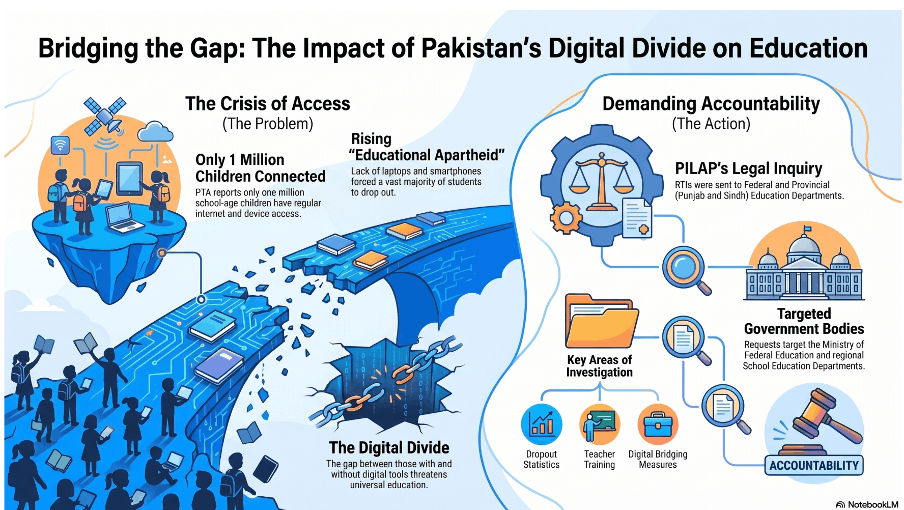
PILAP has highlighted the educational crisis intensified by the COVID-19 pandemic and the shift toward remote learning.
As schools moved online, a major digital divide became evident, leaving millions of students without reliable internet access, devices, or the resources needed to continue their education. This gap has deepened educational inequality and contributed to rising dropout rates, particularly among marginalized children.
To address these concerns, PILAP has used Right to Information requests to seek accountability from relevant government ministries regarding their post-pandemic recovery strategies. These inquiries focus on teacher training initiatives, digital learning preparedness, and measures taken to ensure that disadvantaged students have access to the tools required for modern education.
Through this initiative, PILAP emphasizes that bridging the digital divide is essential to protecting literacy, preventing further dropouts, and ensuring equal access to education for all children in Pakistan.
Legal Challenges to Pakistan's Single National Curriculum
National Curriculum
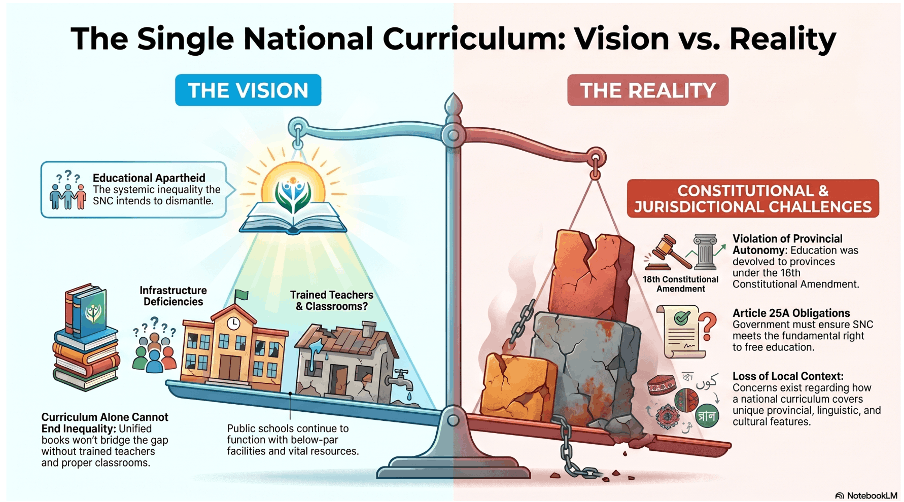
PILAP has highlighted the legal and practical challenges surrounding Pakistan’s Single National Curriculum, an initiative introduced to reduce educational inequality.
While the policy aims to standardize learning across the country, concerns have been raised that a uniform syllabus alone cannot address deeper systemic issues, including poor school infrastructure, limited resources, and the shortage of qualified teachers.
The initiative also raises important constitutional questions, particularly regarding whether the federal government may be entering areas that fall within provincial authority. To examine these concerns, PILAP filed a Right to Information request seeking clarity on how the policy fulfills the State’s obligation to provide free and accessible education.
Through this work, PILAP questions whether a centralized curriculum can achieve meaningful educational reform without addressing resource disparities, provincial autonomy, and Pakistan’s diverse regional identities.