
About PILAP

The Public Interest Law Association of Pakistan is dedicated to advancing Constitutional rights through research, advocacy, and strategic litigation. We work to create systemic change that protects and empowers all citizens.

PILAP HISTORY

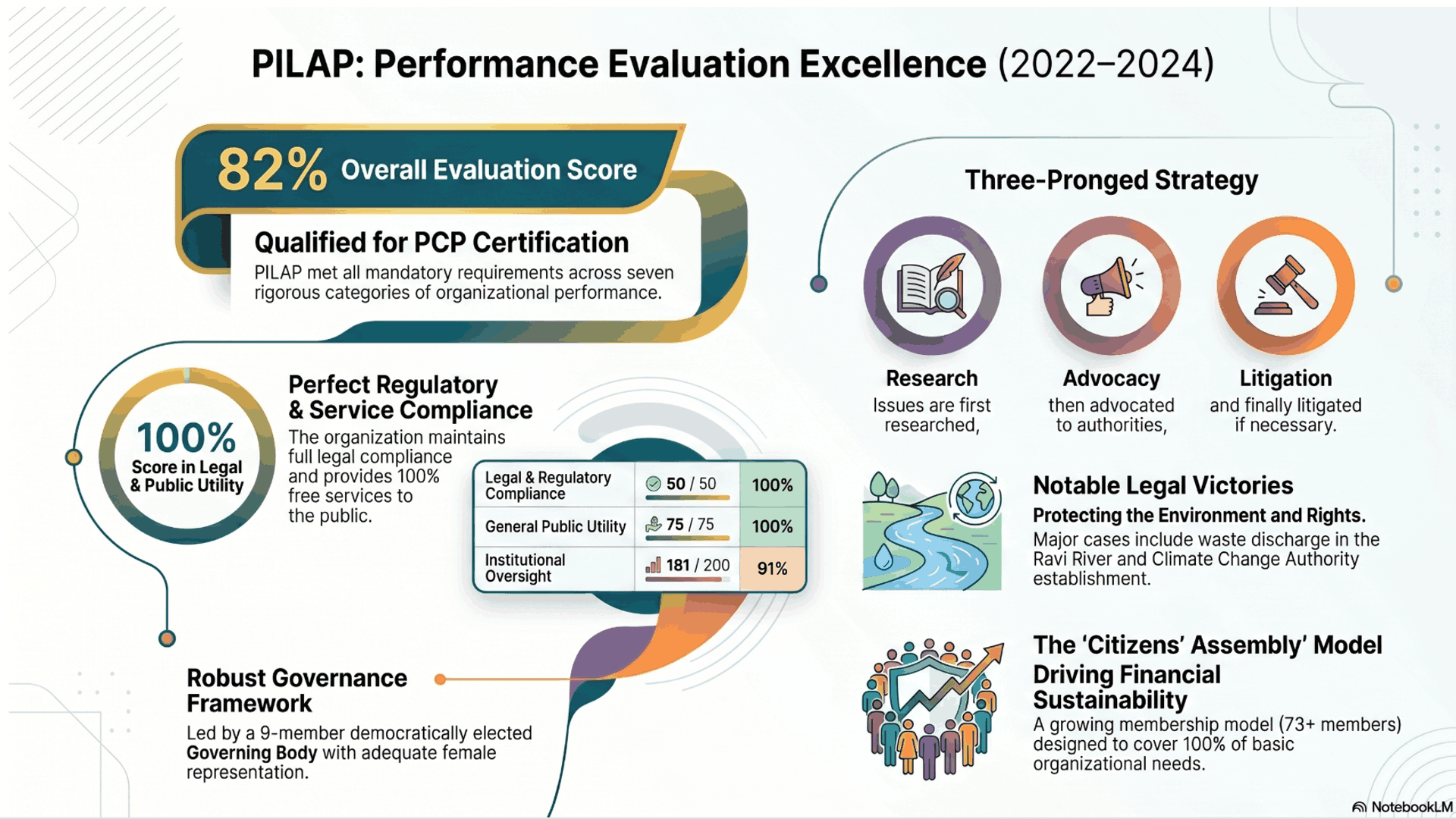
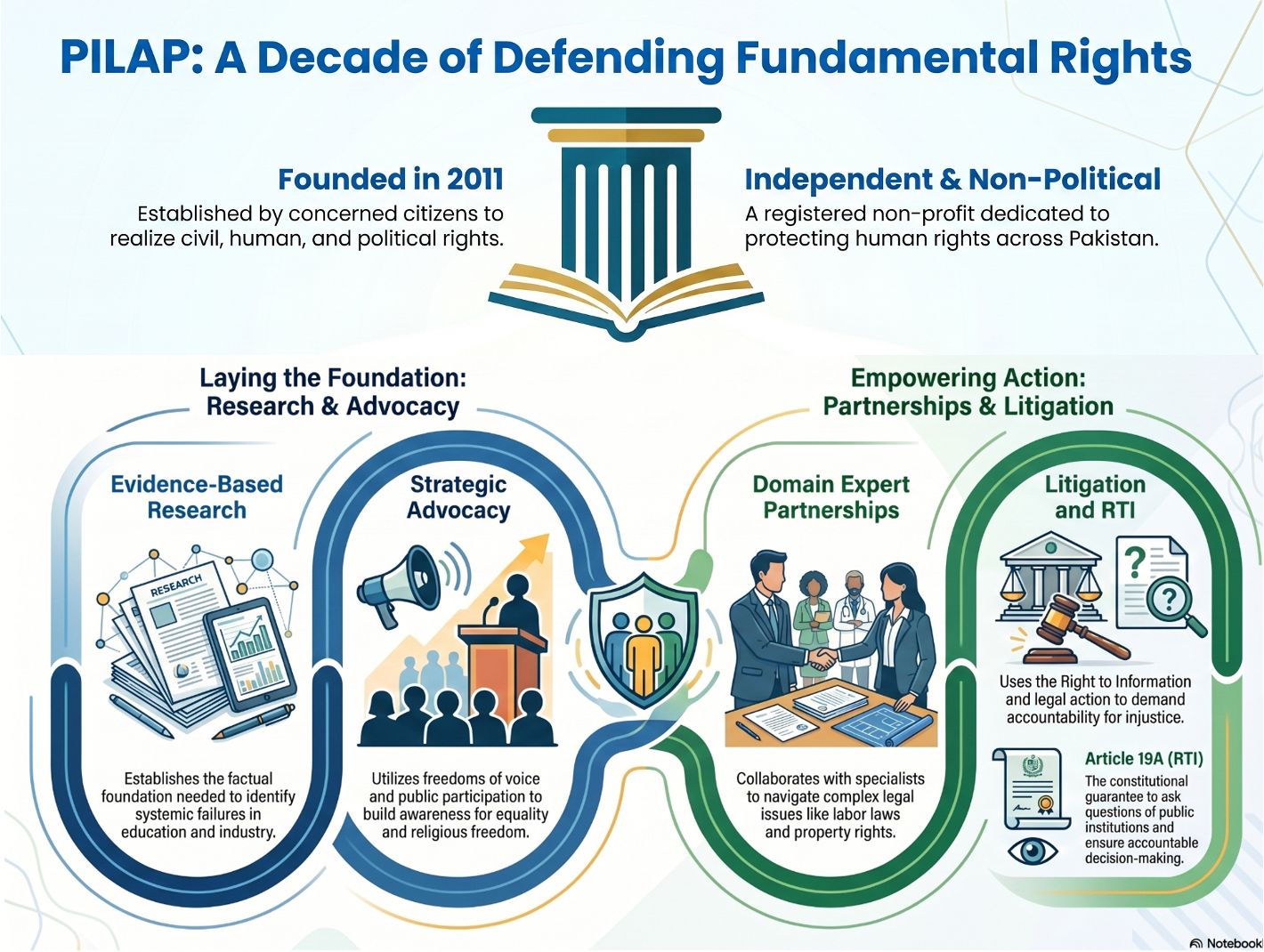
The Public Interest Law Association of Pakistan was founded in 2011 by a group of concerned citizens with the primary objective of enabling Pakistanis to attain the realisation of their civil, human, economic, social and political rights. It is an independent, non-political and not-for-profit organisation that is dedicated to protecting and defending human rights through research, advocacy and judicial means, across Pakistan. It is registered as a Society under the Societies Registration Act, 1860. PILAP conducts its public interest work through means of research, advocacy, and litigation. Another pillar very critial to our success is to have strong parternships with domain experts.

Research: Once a matter of public interest issue is selected the organisation conducts thorough research into the issue by looking into factual and background information and conduct legal research to assess how fundamental rights are being affected and which government authority can be approached for redress.

Parternships: Due to Pakistan’s vibrant social enterprieses sector there exist experts in various fields with decades of knowledge on specific public interest issues. We partner with them, with lawyers, researchers, and civil society groups, to understand complex issues and develop practical legal solutions.

Advocacy: Armed with this information, we then approach the concerned public authority by advocating for the grant of fundamental rights owed to the people. Advocacy is undertaken through applications submitted under the Right to Information laws and, if need be, appealing to the Pakistan Information Commission. We also submit letters to Federal Ministries advocating for the passage of bills that are crucial to the fulfillment of fundamental rights. On occasion we issue public statements on important matters of public interest.

Litigation: The final stage in our public interest work is seeking redress through the courts of law by filing writ petitions for the enforcement of fundamental rights.
PILAP Strategic Value Addition

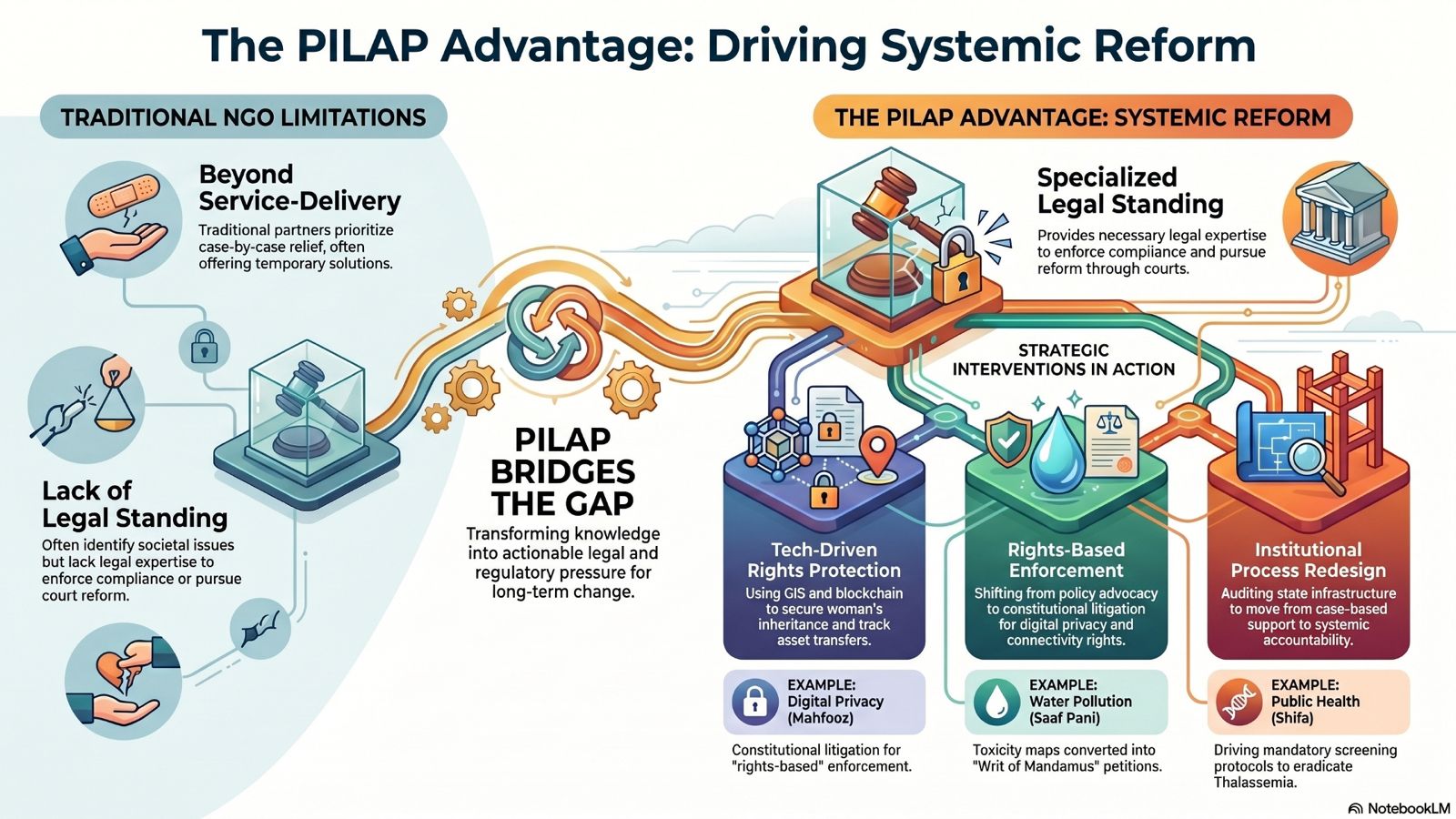
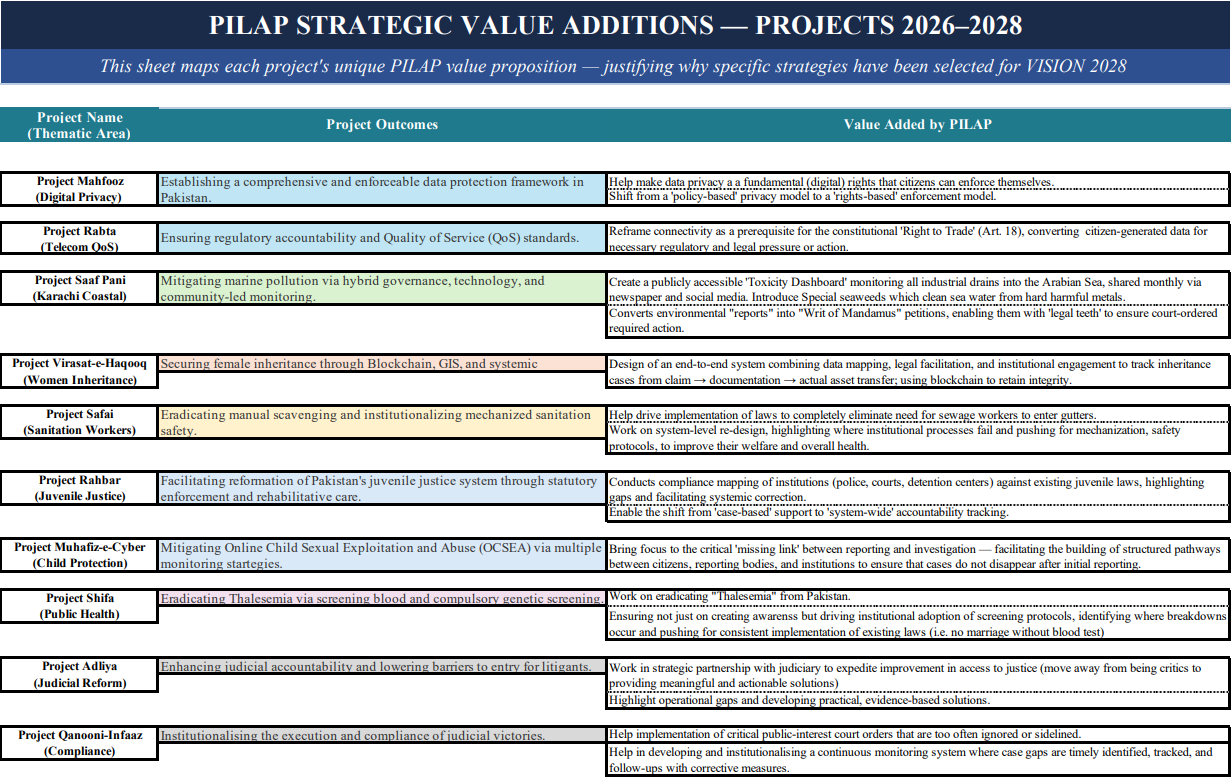
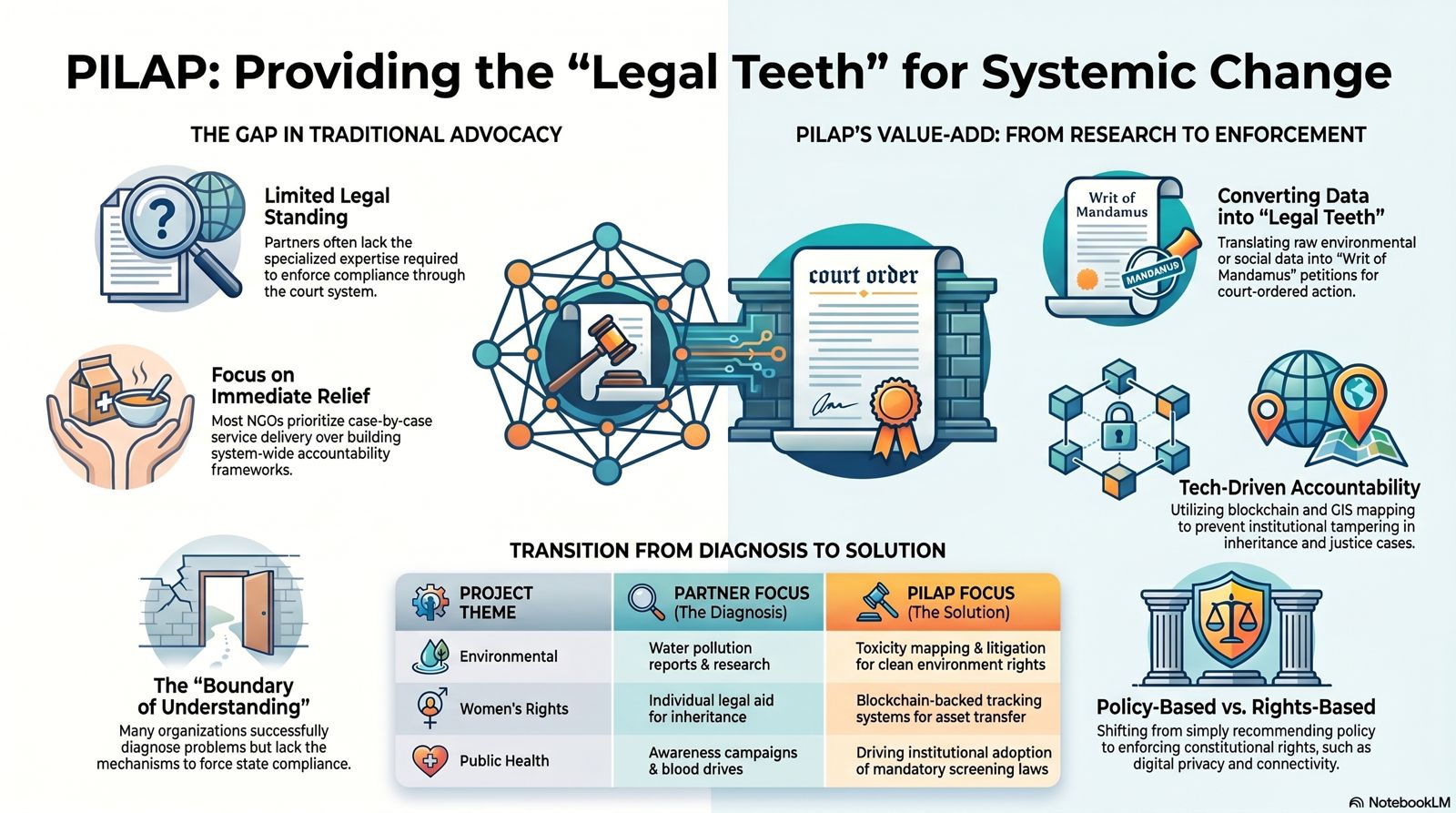
Unlike our partner organizations and the wider NGO sector, PILAP brings a distinct and decisive advantage to the table. While partner organizations contribute valuable domain knowledge, grassroots presence, and data collection, they often lack the specialized legal enterprise and institutional mandate necessary to compel meaningful reform. PILAP fills that critical gap by combining legal acumen with the ability to drive systemic change.
PILAP serves as a legal and structural catalyst, bridging the gap by turning research and advocacy into enforceable system-wide change through litigation, constitutional frameworks, and technology. Its work across digital rights, environmental protection, social justice, and judicial reform ensures policy recommendations translate into binding state compliance.

The Comparative Advantage: PILAP vs. Partner Organizations
While various NGOs and academic centers are effective at diagnosing societal issues, they face two primary limitations that PILAP is designed to overcome:

  1. Lack of Legal Standing: Most partners lack the specialized expertise to pursue systemic reform through the courts or enforce compliance with existing laws.

  2. Service-Delivery Focus: Many organizations prioritize case-by-case relief or policy recommendations rather than building the tech-driven, system-wide accountability frameworks necessary for long-term impact.

PILAP’s unique value proposition is the conversion of partner-generated domain knowledge into actionable legal and regulatory pressure.

PILAP Certified by Pakistan Centre of Philanthropy (PCP)

Public Interest Law Association of Pakistan (PILAP) successfully obtained Pakistan Center of Philanthropy (PCP) certification which is now valid for 3 years, 2025 to 2027

Calendar of Events

Citizens Assembly Session

TBD

Islamabad

June 23rd, 2026

Open Session on PILAP

TBD

Islamabad

June 22nd, 2026

Open Session on PILAP

Habitt Auditorieum

Karachi

June 11th, 2026

Citizens Assembly Session

Defence Club, Ph 2

Karachi

May 1st, 2026

Law Student Class

Islamia College

Peshawar

April 20th, 2026

Open Session on PILAP

Daftarkhwan

Lahore

April 17th, 2026

Citizens Assembly Session

CERP HQ

Lahore

April 16th 2026

Journalism Student Class

Karachi University

Karachi

August 8th, 2025

Open Session on PILAP

Habitt Auditorieum

Karachi

May 11th, 2025

Citizens Assembly Session

CERP HQ

Lahore

May 27th, 2025

Open Session on PILAP

PSTD

Karachi

May 16th, 2024

Podcast Sessions

ISSUE

SPEAKER

DATE

ACTION

Indus Water Treaty

Danish Mustafa

26.05.2025

Purpose of Public Interest

Tariq Banuri

22.03.2025

Statelessness and Rights of Children in Pakistan

Tahera Hasan, Director of Imkaan Welfare Organisation

27.09.2024

Animal Welfare in Pakistan

Ayesha Chundrigar, Founder-ACF Animal Rescue

16.11.2023

Child Labour

Farhat Parveen – Executive Director, National Organisation for Working Communities

29.09.2023

Rights of Persons With Disabilities (PWD)

Omair Ahmad – CEO, NOWPDP

08.09.2023

Right to Information

Advocate Anwar Kashif Mumtaz

29.8.2022

Justice for Sanitary Workers

Naeem Sadiq

19.9.2022

Karachi projects and their environmental effect especially Malir Express Way

Arif Belgaumi

17.10.2022

Untreated Sewage in Arabian Sea

Ahmed Rafay Alam

02.12.2022

Right to Education

Dr. Amjad Waheed

19.01.2023

Board Members

Meet the dedicated professionals working to advance Constitutional rights across Pakistan

Saad Amanullah Khan

Chairperson

Maroof A. Syed

Vice Chairperson

Athar Osama

EC Member

Asim Ghaffar

EC Member

Muhammad Aminuddin

Ec Member

Shamsuddin A. Sheikh

EC Member

Sheikh Imranul Haque

Member

Dr. Sara Saeerd Khurram

Ec Member

Amina Aijaz

EC Member

PILAP Leadership Team

Noor Muhammad Khan

Executive Director

Amna Ali

Manager Legal Affairs

Syed Nawazish Ali

Manager Finane Admin

Founding Board

Dr. Amjad Waheed

Justice Nasir Aslam Zahid

Salima Hashmi

Nasim Beg

Nasira Iqbal

Khalid Aziz Mirza

Aftab Nabi

Ahmed Rafay Alam

Kemal Shoaib

Kazim Hassan

Akmal Wasim

Partners

Organisation

Why Relevant

LOGO

CERP

Research and policy evidence partner producing rigorous evaluations relevant to governance and social sector reform

Faculty of Law, Ziauddin University

Legal education and clinical law programmes supporting rights-based lawyering and access to justice

Garbage Can

Environmental awareness and urban sustainability initiative with strong youth and community outreach

Health Oriented Preventive Education (HOPE)

Healthcare service provider with community outreach in underserved areas; social determinants of health partner

Hissar Foundation

Federal climate and environmental policy lead

I AM KARACHI

Urban civic engagement platform fostering community ownership and city-level advocacy

IBA CEJ

Media and journalism education hub; supports evidence-based reporting and policy communication

Pakistan Innovation Foundation

Innovation ecosystem builder linking civil society, tech, and public sector for systemic reform

SAHIL

Child protection organisation focused on abuse prevention, reporting and survivor support

Shehri

Urban rights and civic advocacy organisation focused on citizen participation and city governance

WWF-Pakistan

Marine pollution, conservation, evidence and public campaigns

Watch our latest online consultative session as the Public Interest Law Association of Pakistan (PILAP) meets with world-renowned medical geneticist Dr. Sirous Zeinali to outline a transformative, evidence-based roadmap for Thalassemia prevention in Pakistan under Project Shifa. This discussion highlights key actionable outcomes, including launching localized pilot implementations, conducting baseline research alongside premier partner institutions like the Indus Hospital and Fatimid Foundation, mobilizing mainstream media for community sensitization, and engaging religious leaders to successfully institutionalize premarital screening. We also explore the strategic planning of a study visit to observe Iran’s landmark national prevention infrastructure and conduct comparative quality control analyses. PILAP extends its deepest gratitude to Dr. Sirous Zeinali for his exceptional generosity, invaluable time, and expert mentorship, which will undoubtedly help Pakistan replicate the “Iranian Model” and protect future generations. #ProjectShifa #ThalassemiaPrevention #SafeBloodForLife #ScreenBeforeSign

Our Team

PILAP is governed by a board of directors committed to transparency, accountability, and the highest standards of public interest law practice. Our governance structure ensures that we remain true to our mission while adapting to the evolving needs of Pakistani society.

Empowering her Rights: A Digital Revolution in Women’s Rights

Project Virasat-e-Haqooq is a comprehensive strategic initiative designed to
protect and enforce the inheritance rights of women through advanced
technological and legal reforms.
Running from 2026 to 2028, the framework aims to eliminate systemic
dispossession by integrating blockchain-backed ledgers and GIS
mapping to track and secure land transfers.
The initiative focuses on closing the gap between death registrations and
property mutations while actively challenging the coerced relinquishment of
land known as Tanazul.
By utilizing class action litigation and public advocacy, the project seeks to
hold state revenue authorities accountable for negligence and record
tampering.
Ultimately, the strategy works to transform female inheritance into
an automated, tamper-proof legal right supported by transparent data and
independent legal counsel.
This multidimensional approach combines digital rights, educational
campaigns, and rigorous institutional oversight to ensure female heirs receive
their rightful entitlements.

Project Taalim: Strategic Framework for Reforming Pakistan’s Education System

This outlines a multifaceted strategy to enhance the Pakistani academic
framework through both structural and social reforms.
It emphasizes the necessity of increased financial investment and the
implementation of modernized teaching standards to foster better learning
outcomes.
The visual identifies specific goals, such as bridging gender gaps in schooling
and integrating advanced digital technologies into the classroom.
Furthermore, it advocates for stricter institutional oversight and collaborative
efforts between the state and private entities to ensure long-term progress.
By focusing on curriculum innovation and university-level research, the
source presents a comprehensive roadmap for national educational
development.

Project Shifa: Thelessemia Free Future: Ensuring Rights, Saving Lives

Project Shifa is a comprehensive legal and social initiative designed to safeguard
the rights of Thalassemia patients through institutional reform.
The program seeks to mandate advanced blood screening technologies via court
orders to prevent the transmission of infections during transfusions.
Furthermore, the strategy involves lobbying for tax exemptions on medical
supplies and establishing a centralized national database to accurately track the
prevalence of the disease.
A major pillar of the project is the implementation of compulsory pre-marital
genetic testing to curb the hereditary spread of the condition.
By holding the government accountable through litigation and policy advocacy,
the initiative aims to make life-saving treatment affordable and accessible for all
families.
These efforts collectively work toward a future where preventative laws and
healthcare standards protect the most vulnerable citizens.

Mechanizing Sanitation and Securing Worker Dignity

Project Safai, is a comprehensive initiative dedicated to ending the hazardous
practice of manual scavenging in Pakistan.
The strategy focuses on mechanizing sanitation by replacing human labor with
locally manufactured low-cost robots and specialized machinery.
Beyond technology, the project aims to transform laborers into business
owners through cooperatives, significantly increasing their monthly income and
legal protections.
A critical component of the plan includes a digital tracking system to monitor
safety logs and verify worker health before maintenance begins.
By targeting a nationwide mandate for machine-led cleaning by 2026, the
initiative seeks to eliminate workplace fatalities and restore human dignity to
minority workers.
This multifaceted approach is supported by various welfare organizations and
legal advocacy groups to ensure long-term institutional change.

Project Saaf Pani: Karachi Coastal Regeneration Strategy

This initiative outlines Project Saaf Pani, an ambitious initiative designed to
restore Karachi’s coastal ecosystem through community-led oversight and modern
technology.
The strategy emphasizes hybrid governance, utilizing local “Coastal Watch”

teams and a “Digital Toxicity Map” to hold industrial polluters accountable via real-
time data and legal action.

To address contamination, the plan proposes nature-based solutions, such as
using seaweed for bioremediation, which simultaneously cleans the water and
creates economic opportunities for fishing families.
By filing Public Interest Litigation and transparency requests, the project aims to
mandate the installation of waste treatment plants across industrial zones.
Ultimately, these efforts seek to transform the harbor by combining legal advocacy,
scientific research, and public awareness campaigns to eliminate marine pollution.

This comprehensive framework focuses on measurable outcomes to ensure the long-
term health and economic viability of the region’s maritime environment.

Project Rahbar: Reforming Pakistan's Juvenile Justice System

Project Rahbar is a comprehensive initiative designed to reform Pakistan’s
juvenile justice system by ensuring the legal and physical protection of minors.
The project aims to end the incarceration of children in adult facilities by
enforcing existing laws, such as the Juvenile Justice System Act of 2018.
Key strategies include operationalizing local justice committees,
integrating digital age-verification systems with national databases, and
establishing specialized observation homes managed by NGOs.
Furthermore, the initiative seeks to eliminate financial barriers to justice by
providing legal aid and bail support for impoverished youth.
Through litigation, advocacy, and social media campaigns, the project focuses
on shifting the legal framework from a punitive approach to one centered
on rehabilitation and child welfare.

Project Rabta: A Blueprint for Digital Rights and Accountability

Project Rabta outlines a comprehensive strategic framework aimed at
establishing stable internet access as a protected civil right in Pakistan.
The initiative utilizes a combination of strategic litigation, legislative
advocacy, and public transparency to hold the national regulator accountable
for service disruptions and shutdowns.
Key milestones include securing a landmark court ruling by 2026 to
link connectivity with the right to trade and mandating automatic
consumer refunds for poor service quality.
By leveraging Right to Information requests and independent expert
veriDication, the project seeks to challenge government data and
ensure corporate accountability for connectivity standards.
Ultimately, the plan empowers citizens through social media activism and
educational workshops to demand a more transparent and reliable digital
infrastructure.

Project Qanooni-Infaaz: Bridging the Judicial Implementation Gap

Project Qanooni-Infaaz is a strategic judicial reform initiative designed to bridge
the gap between legal victories and actual enforcement on the ground.
The program outlines a multi-year roadmap starting in 2026 to
identify government bottlenecks and use aggressive litigation, such as contempt
proceedings, to force state compliance.
By utilizing RTI applications and public audits, the project aims to expose
administrative inertia and hold speciBic ofBicials accountable for ignoring court
orders.
Ultimately, the initiative seeks to integrate judicial directives into permanent
policy and standard operating procedures within state departments.
To ensure long-term success, a dedicated Judicial Compliance Unit will be
established to provide continuous monitoring and public updates on the status of
high-impact reforms.
This systematic approach ensures that court-ordered protections for human rights
and safety are fully realized rather than remaining mere paper triumphs.

Project Muhafiz-e-Cyber: Decentralised Child Protection Strategies

Project Muhafiz-e-Cyber is a comprehensive strategic framework designed to
combat online child sexual exploitation through decentralized monitoring and
improved legal pathways.
The initiative aims to empower local communities and schools by establishing
“Cyber Watch” units and “Safe Screen” centers to bridge the gap between reporting
and formal investigations.
By implementing digital reporting kiosks and automated computer systems, the
project seeks to eliminate geographical barriers and administrative inefficiencies
that often lead to lost abuse reports.
Through a combination of targeted litigation, public advocacy, and social media
campaigns, the strategy works to dismantle the social stigma surrounding digital
crimes.

Ultimately, the project strives for official government recognition of community-
led monitoring and the integration of secure, trauma-informed support systems

within the educational landscape.

These efforts are focused on ensuring swift justice and continuous protection for
young victims in the digital age.

Systemic Reform of Nikah Nama Registration

Project Muhafiz-e-Haqooq is a comprehensive initiative designed to
safeguard women’s legal rights within marriage contracts through systemic
reform and digital modernization.
The project aims to eliminate the unauthorized removal of vital contractual clauses,
such as the right to divorce, by transitioning to a mandatory digital registration
system for marriage officers.
These efforts are supported by professional certification requirements and
biometric verification to ensure registrars are held legally accountable for their
duties.
Additionally, the initiative focuses on financial autonomy by pursuing litigation
that holds the state liable for administrative errors that deprive women of
their dowry or inheritance.
Through widespread educational campaigns and university workshops, the
project seeks to empower brides with the knowledge necessary to
negotiate informed consent.
Ultimately, the strategy combines legal advocacy, technological solutions, and
social awareness to ensure the Nikah Nama serves as a protected legal document
for all women.

Project Mahfooz: A Framework for Pakistan’s Digital Rights Reform

Project Mahfooz is a strategic initiative designed to establish a robust data
protection framework in Pakistan by securing the enactment of comprehensive
privacy laws.
The initiative seeks to elevate personal privacy to a fundamental human right,
ensuring that state digital systems integrate “Privacy-by-Design” principles from
their inception.
Through a combination of legal advocacy, research, and litigation, the project
aims to hold both government and private entities financially accountable for
security breaches and data negligence.
Furthermore, it focuses on creating an independent regulatory body to oversee
data usage and eliminate the digital exclusion caused by administrative errors in
identity systems.
By 2028, the program intends to reduce the arbitrary blocking of citizens’ services
and guarantee that personal information is treated with the dignity it deserves.

Project Adliya: Accountability and Access to Justice

Project Adliya is a comprehensive strategic framework designed to transform the
legal system by increasing judicial accountability and expanding public access to
justice.
The initiative seeks to implement a public reporting system by 2026 to track
court spending and the resolution of citizen complaints.
To decrease the burden of high legal costs and long delays, the plan proposes the
establishment of mediation centers and the operationalization of alternative
dispute resolution laws.
A significant portion of the project focuses on vulnerable populations, aiming to
secure pro bono legal services and create dedicated support centers for
women within court complexes.
Through a combination of public interest litigation, data-driven research,
and social media advocacy, the project intends to make the judiciary more
transparent and affordable for all citizens.